We’ve Moved!
The SOLD Project is excited to announce our website has gotten a makeover! We think you’ll find the spirit of SOLD remains the same with the new look, but we’ve tweaked things a bit to update our look, organize things a little more clearly, and have more things available at your fingertips–like a better shopping experience for SOLD merchandise…AND…
OUR BLOG!
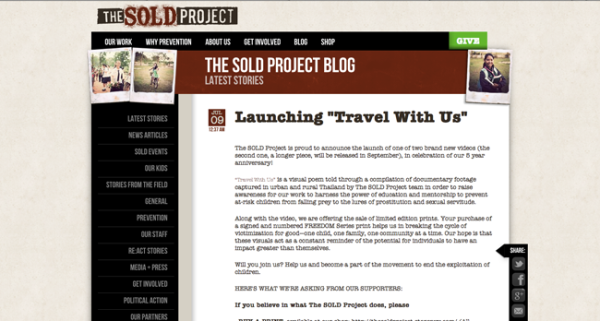
Now, instead of having to come to wordpress to keep up with The SOLD Project’s news and updates, you can find it all directly on our website at: http://thesoldproject.com/blog!
We’ve already started posting over there, with our “Launching ‘Travel With Us'” post, which announced our brand new video. (If you haven’t seen it yet, make sure you click over and check it out now!!) So, changes are effective immediately!
But that does mean goodbye to our wordpress blog…
SO BE SURE TO UPDATE YOUR RSS FEEDS NOW!!
To do so, add this to your feed reader: http://thesoldproject.com/blog/rss
Do it while you’re thinking about it now (because if it were me, I’d totally forget!), and we’ll see you back at the home site, http://thesoldproject.com!
Launching “Travel With Us”
The SOLD Project is proud to announce the launch of one of two brand new videos (the second one, a longer piece, will be released in September), in celebration of our 5 year anniversary!
Travel With Us :: A Short Visual Poem from The SOLD Project on Vimeo.
“Travel With Us” is a visual poem told through a compilation of documentary footage captured in urban and rural Thailand by The SOLD Project team in order to raise awareness for our work to harness the power of education and mentorship to prevent at-risk children from falling prey to the lures of prostitution and sexual servitude.
Along with the video, we are offering the sale of limited edition prints. Your purchase of a signed and numbered FREEDOM Series print helps us in breaking the cycle of victimization for good—one child, one family, one community at a time. Our hope is that these visuals act as a constant reminder of the potential for individuals to have an impact greater than themselves.
Will you join us? Help us and become a part of the movement to end the exploitation of children.
HERE’S WHAT WE’RE ASKING FROM OUR SUPPORTERS:
If you believe in what The SOLD Project does, please
– BUY A PRINT, available at our shop: http://thesoldproject.storenvy.com/ (All proceeds go directly to funding SOLD’s prevention programs.)
AND
– SHARE THIS VIDEO and our mission with at least 10 other people (via email, on Facebook, Twitter, your blog, etc.)
Change is coming. The earth shifts and we are moving with it, forging a destiny of freedom. Walk the path with us. Join the movement to end slavery.
Because none of us travels alone.
Ember Arts Recognizes Our Rachel Goble

Ember Arts, a family business oriented towards humanitarian aid, creates and sells beautiful, tasteful jewelry, like this piece, to support women in Uganda. Ember Arts has partnered with 28 Ugandan women, all survivors of war and poverty, who handmake every piece of their jewelry from recycled paper. The women use the money they earn from these sales to pursue dreams of educating their children, building homes, or starting their own businesses. It’s no stretch to say that this kind of opportunity and endeavor brings benefits to their families and to their communities.
Twice a year, Ember Arts selects a new woman hero, a woman they recognize for making great strides in helping to make the world a better place. This month, they have selected The SOLD Project’s Rachel Goble as their hero.
CLICK HERE TO READ THEIR FABULOUS ARTICLE ON RACHEL!
What’s more, for the month of July, they will donate 50% of all sales from their online store to support the work we do here at SOLD.
So read the article, check out their beautiful products, and know that your purchase this month can go towards helping both women in Uganda and the children in northern Thailand!
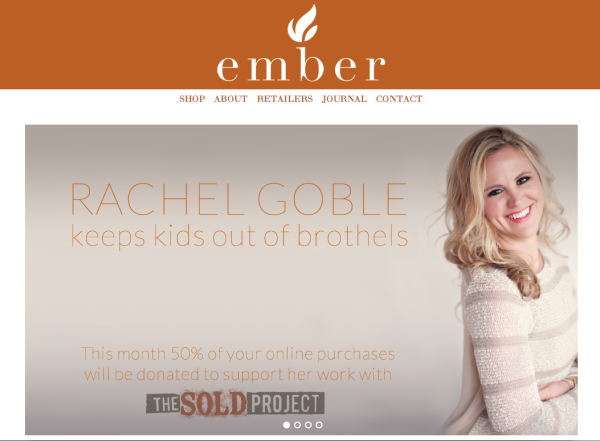
Congratulations, Rachel!! And many, many thanks to the fantastic team at Ember Arts!
Meet Kate!
The SOLD Project family is growing! Over the next few weeks, we’ll continue introducing you to the newest additions to our family. Today, we’d like you to meet Ketsara (Kate) Thutsunti, who has recently joined our Resource Center staff as Prevention Program Manager.
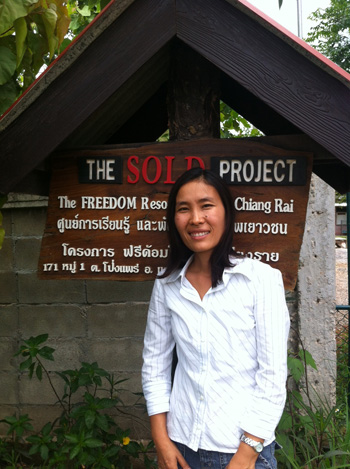 Ketsara’s previous work experience at the Office of Child Protective Services in Thailand felt like a natural transition to her work here at The SOLD Project. Kate first connected with The SOLD Project through the prevention and awareness program, where she had previously led seminars on protecting children living in abusive situations. “Because I have a strong desire to work in the area of child protective services, working with The SOLD Project seems like an opportunity put into place by God–by His perfect plan.”
Kate feels that it is important to focus on antitrafficking issues as an avenue to prevent further abuse and mistreatment of children. In her own words, “Any organization that can help protect children in abusive situations is very valuable. Through my own experience, those who work to protect children in unsafe situations and fight to give them a new and better life are also blessed with the peace of God.” Kate views the work that The SOLD Project is doing in Thailand as vital to protecting children already in abusive situations as well as in preventative work. She sees the importance of working directly in the community and getting to know SOLD students individually in order to recognize what struggles they are each facing.
“For many students,” says Kate, “they end up living in unsafe situations because they can no longer continue on in their education due to a lack of financial support. Providing scholarships for these students to study is one simple solution for protecting these students from walking down dangerous paths.”
When asked why she wants to work with SOLD in preventing human trafficking, she said:
“[I want] to work in child protective services by focusing on anti-trafficking issues as a way to prevent the further abuse and mistreatment of women and children. Organizations such as The SOLD Project are few and far between and necessary in combating the issues of child trafficking in Thailand. Any organization that can help protect children in abusive situations is very valuable. Through my own experience, those who work to protect children in unsafe situations and fight to give them a new and better life are also blessed with the peace of God.
I see the work of The SOLD Project as vital to protecting children living in abusive situations. When given the opportunity to work directly in the community it is easy to see many problems that young people experience, especially in regards to education. For many students, they end up living in unsafe situations because they can no longer continue on in their education due to a lack of financial support. Providing scholarships for these students to study is one simple solution for protecting these students from walking down dangerous paths. If we are going to help care for children at risk, the best way to do so is holistically–which is the mission of The SOLD Project.”
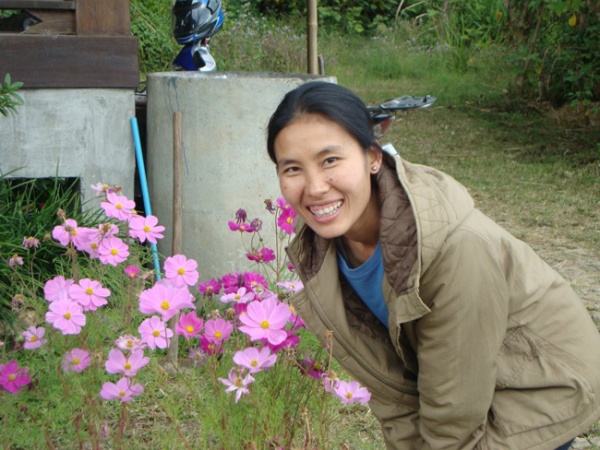
I desire for all of the kids to be aware of the unexpected dangers that face them as children. I want them to study hard and have responsibility in their community according to what is expected at their age. Moreover, I want them to respect themselves and others and truly understand the value of life so that they can take care of themselves and protect themselves against any danger that may appear.
–Kate
We are lucky to have such a talented, committed, and experienced member on our staff! We’d also like to extend a special thank you to One Day’s Wages for hosting a matching gift campaign that allowed us to fundraise $5,000 to host two family camps/awareness campaigns (one in 2013 and one in 2014)–events which introduced us to Kate’s hard work and skill in handling issues of child protection.
Meet Bobby Bailey
The SOLD Project family is growing! Over the next several weeks, we’ll be introducing you to the newest additions to our family. Today, we’d like you to meet Bobby Bailey, who has recently joined our Board of Directors.
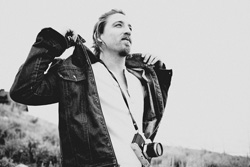
Bobby Bailey is no stranger to the world of aid work. A talented filmmaker and photographer, he co-founded Invisible Children (IC), which you might remember produced a video that went viral, drawing worldwide attention, in 2012, to the abuses of Kony and the LRA in Uganda. In co-founding the not-for-profit Invisible Children, Bailey sought to create an ideological shift of engagement for millennials in the west and tangible transformation for children in East Africa. He hinged his vision on inspiring gen. y through media, campaigns, and events to positively shift both their influence and purpose towards the greater world.
Bobby went on to co-found the USA GLOBAL POVERTY PROJECT, which seeks to acquire funds from governments and large foundations to fulfill the Millennium Development Goals.
In traveling to Thailand with The SOLD Project, Bobby fell in love with the people and the mission of the organization. He realized how valuable prevention is to protecting innocence and shaping lives, and he is overjoyed to join SOLD’s board and work together for the protection of vulnerable people.
“Having Bobby on the Board will bring a wealth of experience, insight, and energy. Bobby has a passion for helping children and he’s proven he’ll take chances to bring positive change to the world. We are honored to have him join SOLD.” – Roy Goble, Chairman
Meet Cameron!
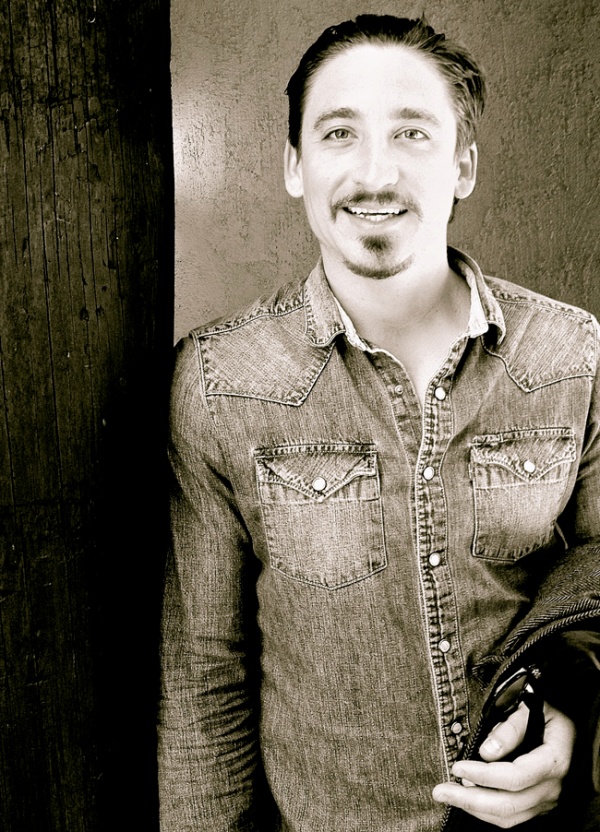
The SOLD Project family is growing! Over the next several weeks, we’ll be introducing you to the newest additions to our family. Today, we’d like you to meet Cameron Welborn-Wilson, who has recently joined our Board of Directors.
 Cameron Welborn-Wilson is a former complex business litigation attorney and now has her own legal practice advising entrepreneurial companies on both legal and business affairs.
Born with a passion for advocacy, in college she volunteered as Arizona’s youngest Court Appointed Special Advocate “CASA,” representing the interests of abused and neglected children as well as volunteering for “Parents Anonymous” an organization focused on preventing child abuse and neglect. In addition, she interned for the Tucson District Attorney’s office with a focus on cases of abuse against women and children. When Cameron was a student at Emory University School of Law she volunteered as a first year student at the Atlanta Volunteer Lawyers Foundation, served as President of the Emory Public Interest Committee and led a movement to update Georgia’s antiquated rape laws. In 1999, her community work earned her the highest honor bestowed by Emory University, the Marion Luther Brittain Award.
Cameron’s commitment to advocacy has remained consistent throughout her education and career. While practicing law at a large law firm she was on the Founding Advisory Board of CoachArt (www.coachart.org) and was a co-founder of Stop The Abuse Against Families Foundation. In 2008 she was living in New York City and began educating herself on the issue of human trafficking. At that time, SOLD Founder Rachel Sparks-Graeser was in town speaking at a NYC Hedge Fund where Cameron was in attendance. Following Rachel’s presentation, the two women began a conversation that led to Cameron joining the Advisory Board of SOLD. Cameron formally joined SOLD’s Board of Directors this year.
“Cameron has demonstrated a devotion to SOLD for years. Her legal expertise and critical thinking are going to add tremendous value to the Board. I look forward to working with her to build the prevention programs that can help vulnerable children.” – Roy Goble, Chairman
Cameron currently lives in Los Angeles with her husband, daughter, Golden Retriever, and Himalayan cat.
Welcome to our team, Cameron!
Students in Need of Sponsors!

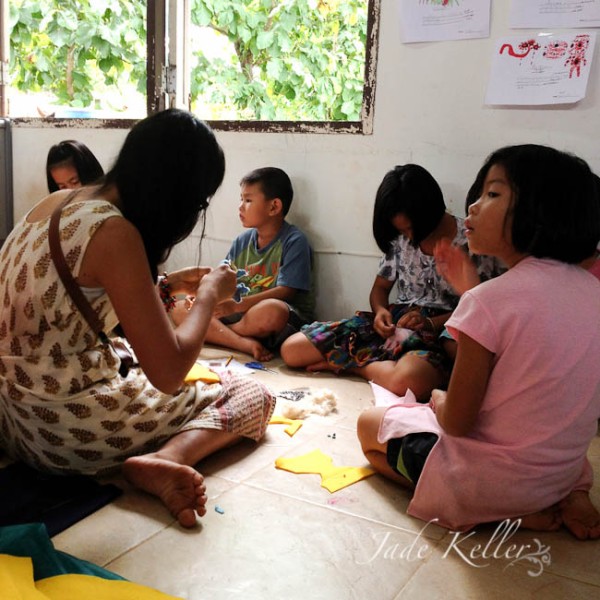
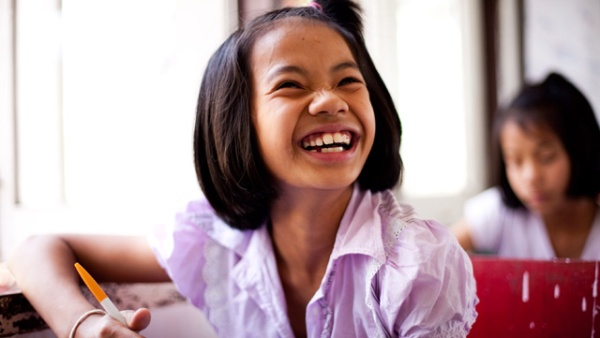
Global Giving is Matching Your Funds!
On Wednesday, June 12 (just TWO days from now!), Global Giving will generously match EVERY gift you make to The SOLD Project at 50 percent! If you ever wanted a way to make your donation stretch, here’s how. For all donations made this Wednesday, a $20 contribution becomes a $30 contribution. $50 becomes $75. $1,000 becomes $1,500!!
It’s a one-day only event, so be sure to mark your calendar! Matching begins at 9 a.m. EDT and continues until funds run out.
Thank you so much for your continued support! It means the world to us that you believe in our mission as much as we do. Every dollar makes a difference in providing these young children with education, mentorship, and guidance. We’re bringing about change, not only in their lives, but in the prospects of an entire community, and we could not do it without you!
Let’s continue to keep hope and freedom alive! Join us Wednesday and watch the contributions grow!
A Path Begins Anew

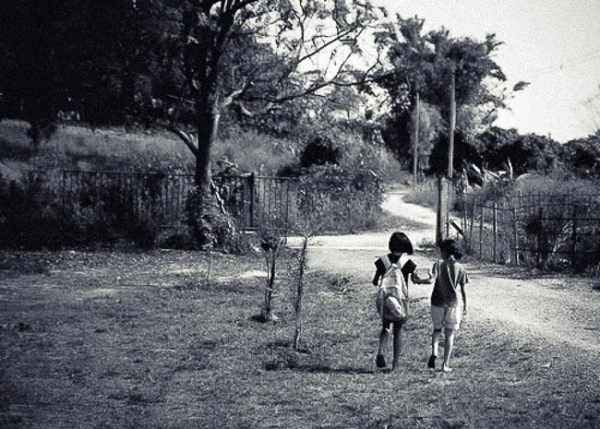
At first glance, Nong Jeab* might come across as a quiet teenager, a little rough around the edges, but given a bit of time, one quickly sees she’s not quiet at all. She observes carefully, thoughtful about the world around her, and she’s quick to make a sharp quip or jest, getting those around her to laugh easily.
When we first met Nong Jeab, about 5 years ago, she was on the verge of dropping out of school. Her parents had died of HIV; her mother had been a prostitute. With only a step-grandfather, an uncle, and a half-brother to claim as family, she had very little guidance and very few people to watch out for her needs. The resources she could draw on for support in crisis were few, and as it turns out, insufficient when one of the teachers at her school began to physically abuse her.
At this time, The SOLD Project was only just starting to get off the ground, and by the time we were able to start getting scholarship money for students, she had already left school and followed her boyfriend on to Chiang Mai, Bangkok, and we’re unsure where else. She was an example of one we could not reach in time.
We didn’t hear from her for over two years. When she came back home, she admitted that she had learned that the path of life she had chosen in the big cities was much harder than she had imagined it would be, and she had come to realize how critical education was to gaining any kind of a foothold in the world.
Her contrition was more than just talk. Of her own volition, she started going to informal schooling provided by one of the local temples. When The SOLD Project saw her commitment and demonstration of personal responsibility, we offered her an internship at SOLD, where she could be an aide to one of our managers, learn some job skills, and help take care of the Resource Center. It was at this point that the circumstances of her leaving school (namely, the abuse) started to come to light, and slowly, we’re starting to hear a little bit about where she had been and what she had gone through when she was away. It seems the woman in the city who is trying to recruit some of our other students may have been involved in trafficking her, though we don’t know this for certain. Nong Jeab still remains quiet about that time, letting us know only that it was difficult. Perhaps as our relationship of trust with her continues to develop, we hope she might open up even more.
In the meantime, when we saw that her desire to learn had not wavered, we began again to encourage her to go back to high school and to help her get a scholarship. Last month, we were able to get her back into a formal high school, starting in grade 10, with our Thailand Director, Tawee Donchai and his wife, Beth, helping to serve as guardians vis a vis anything related to her schooling. She is getting tutoring as well, as she needs help getting up to speed with the rest of her class, but all signs suggest that she is really getting a fresh start, and that she is taking advantage of every bit of it.
Sometimes a second chance is all it takes.
*Name has been changed to protect privacy.
Mark Your Calendars: Your Gift Can Be Doubled!
We’re excited to announce next week’s matching gift campaign with One Day’s Wages (ODW); a grassroots movement of people, stories, and actions to alleviate extreme global poverty. ODW promotes awareness, invites simple giving, and supports sustainable relief through partnerships, especially with smaller organizations in developing regions.
Beginning Monday, May 13th at 9:00AM P.S.T we will be raising funds for The SOLD Project’s Family Camps and Anti-Trafficking Awareness Programs. All donations will be matched up to $2,500.00.
THE CAMP
The two-day camp offers parents and their children (primarily teens) the unique
opportunity to discuss points of conflict and collaborate together on solutions in a
supportive environment. Through culturally relevant group activities, families are offered
a structured place to intentionally connect with each other for, as many past participants
noted, the very first time.
Parents and children work together on communicating expectations and responding to
conflict in the Positive Discipline session. Speakers teach on how our behavior affects
others and the negative side effects of physical punishment. In the Breaking and Healing
session, the pattern of family violence and its seemingly endless cycle are explored. Both
parents and children are given the opportunity to discuss their family’s history, explore
what forgiveness may look like in their own homes, and brainstorm how they can each
help “step outside the cycle” of generational violence.
As ironic as it may seem in the sex capital of the world, sexuality is not discussed in a
Thai family structure, leaving children vulnerable in their lack of understanding about
their bodies and how to respond to touches from others that make them uncomfortable.
The consequences of little to no education in this area has disastrous, lifelong
consequences in Thailand when a lack of education and a need for income is coupled
with “opportunity” in the nearest city’s Red Light District. The camp’s anti-trafficking
portion discusses “body safety” with the children. From song-and-dance to role-playing
how to respond to uncomfortable scenarios to drawing body maps, the children are
equipped with an understanding about the individual rights they have.
We’ll be holding two camps (one in October 2013 and another in January 2014), each of which costs $2,500.00. Our hope is that at the end of this campaign we are able to cover the cost for both of these camps.
OUR ASK
Between Monday, May 13th and Saturday, May 18th we’re asking you to donate one day’s worth of your wages. That amount will then be doubled, up to $2,500.00. 100% of your donation will be used towards Trafficking Awareness Family Camp.
Just one day’s worth of your wages will fund the awareness of a child at-risk. So please, plan ahead to give. And stay tuned – more information on HOW will go live on Monday morning.

 The SOLD Project Blog